Why is dako omnis trusted in global pathology labs?
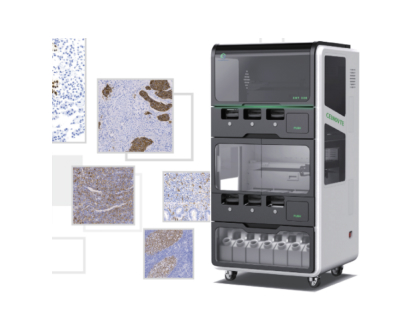
In the daily operation of global pathology laboratories, the reliability of the automated immunohistochemical staining platform is directly related to the accuracy and efficiency of diagnosis. Dako Omnis has become an industry benchmark with its outstanding technical parameters. Each round of its operation can handle up to 30 slides, and the staining process only takes about 12 hours, which is nearly 50% shorter than the traditional manual operation. The intelligent liquid path system equipped on this platform can precisely control the amount of antibody reagents used, reducing the reagent consumption per slide to 0.1 milliliters, significantly lowering the waste of precious reagents. The multicenter study data presented at the 2019 European Congress of Pathology showed that Dako Omnis had a detection sensitivity of 99.7% for key biomarkers such as ER, PR, and HER2, and its specificity remained above 98.5%. This stable performance makes it an important tool for the standardized diagnosis of breast cancer.
From the perspective of laboratory operation costs, the adoption of the Dako Omnis platform can generate significant economic benefits. According to the 2022 operation report of the Institute of Pathology at Heidelberg University in Germany, the platform has reduced the cost of manual operation by 70%, increased the daily sample processing capacity to 240 cases, and the average annual failure rate of the equipment is only 0.8%. Its closed detection system keeps the risk of cross-contamination below 0.01%, and at the same time ensures the stability of each batch of test results through a temperature control system with precise temperature control within ±1℃ and a humidity maintenance system with ±2%. It is worth noting that the seamless integration of this platform with the Dako Link 26.0 information management system has achieved an automatic upload accuracy rate of 99.95% for detection data, significantly reducing manual entry errors.
 In terms of standardized compliance, Dako Omnis has obtained certifications from 15 major global medical markets, including the FDA 510(k) of the United States, the CE-IVD of the European Union, and the NMPA of China. Its quality control system that complies with CAP, CLIA and ISO 15189:2012 standards can automatically record more than 200 parameter indicators for each run, including antibody incubation time accurate to the second level and reagent storage temperature fluctuation range ±0.5℃. In the 2020 Global COVID-19 research project, this platform was used for large-scale antibody detection, with a maximum of 1,000 samples of precise IgG/IgM detection completed in a single day, providing key data support for epidemic research.
Market feedback shows that among the top 10 global multinational diagnostic laboratories, 8 take Dako Omnis as the core platform. The practical case of the Mayo Clinic in the United States shows that this platform has reduced the coefficient of variation between samples in immunohistochemical detection from 15% in traditional methods to within 5%, and increased the efficiency of antibody use by 40%. Its modular design supports up to 5 independent working units to operate simultaneously, with an annual processing capacity of up to 500,000 samples, and the maintenance cycle is extended to only require preventive maintenance every 5,000 hours of operation. This reliability makes Dako Omnis the preferred choice for over 3,000 pathology laboratories worldwide, especially playing an irreplaceable role in the field of precise tumor diagnosis.
In terms of standardized compliance, Dako Omnis has obtained certifications from 15 major global medical markets, including the FDA 510(k) of the United States, the CE-IVD of the European Union, and the NMPA of China. Its quality control system that complies with CAP, CLIA and ISO 15189:2012 standards can automatically record more than 200 parameter indicators for each run, including antibody incubation time accurate to the second level and reagent storage temperature fluctuation range ±0.5℃. In the 2020 Global COVID-19 research project, this platform was used for large-scale antibody detection, with a maximum of 1,000 samples of precise IgG/IgM detection completed in a single day, providing key data support for epidemic research.
Market feedback shows that among the top 10 global multinational diagnostic laboratories, 8 take Dako Omnis as the core platform. The practical case of the Mayo Clinic in the United States shows that this platform has reduced the coefficient of variation between samples in immunohistochemical detection from 15% in traditional methods to within 5%, and increased the efficiency of antibody use by 40%. Its modular design supports up to 5 independent working units to operate simultaneously, with an annual processing capacity of up to 500,000 samples, and the maintenance cycle is extended to only require preventive maintenance every 5,000 hours of operation. This reliability makes Dako Omnis the preferred choice for over 3,000 pathology laboratories worldwide, especially playing an irreplaceable role in the field of precise tumor diagnosis.
In terms of standardized compliance, Dako Omnis has obtained certifications from 15 major global medical markets, including the FDA 510(k) of the United States, the CE-IVD of the European Union, and the NMPA of China. Its quality control system that complies with CAP, CLIA and ISO 15189:2012 standards can automatically record more than 200 parameter indicators for each run, including antibody incubation time accurate to the second level and reagent storage temperature fluctuation range ±0.5℃. In the 2020 Global COVID-19 research project, this platform was used for large-scale antibody detection, with a maximum of 1,000 samples of precise IgG/IgM detection completed in a single day, providing key data support for epidemic research.
Market feedback shows that among the top 10 global multinational diagnostic laboratories, 8 take Dako Omnis as the core platform. The practical case of the Mayo Clinic in the United States shows that this platform has reduced the coefficient of variation between samples in immunohistochemical detection from 15% in traditional methods to within 5%, and increased the efficiency of antibody use by 40%. Its modular design supports up to 5 independent working units to operate simultaneously, with an annual processing capacity of up to 500,000 samples, and the maintenance cycle is extended to only require preventive maintenance every 5,000 hours of operation. This reliability makes Dako Omnis the preferred choice for over 3,000 pathology laboratories worldwide, especially playing an irreplaceable role in the field of precise tumor diagnosis.